Maker campus · Tejgaon, Dhaka

Build the question with your hands.

Orbit Yard workshops turn river systems, sunlight, sound, structures, and spaceflight into things you can test, tune, and take apart. Come curious. We provide tools, materials, and patient guidance.

Programs are fictional previews. Sending an inquiry does not reserve a place or request payment.

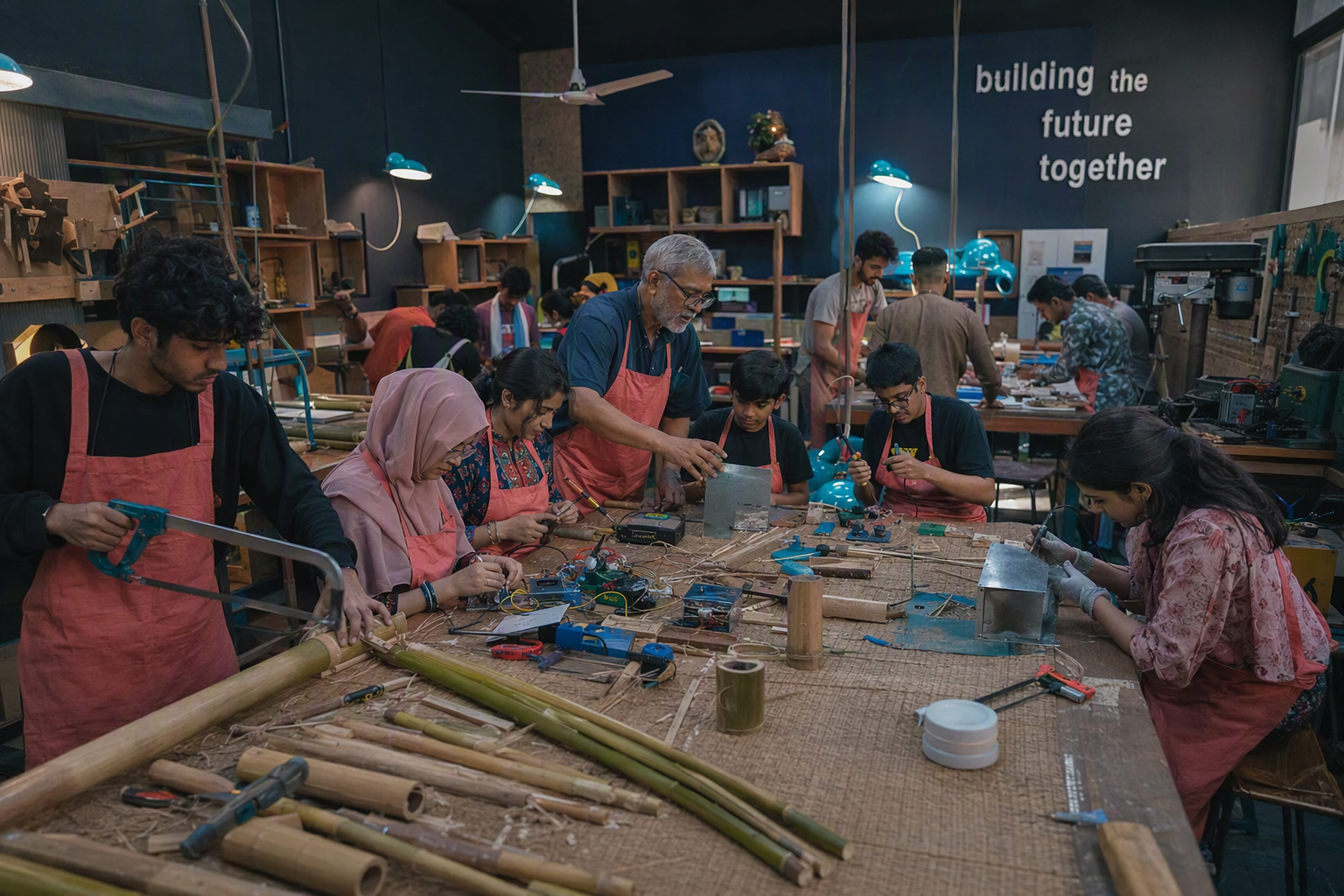
A facilitator and multigenerational group prototyping with bamboo, hand tools, copper tape, and small electronic components around a bright fabrication table
Ideas become testable at the shared fabrication table.

Current workshop studio

Six ways into making

Every program includes a safety welcome, tool demonstration, protected build time, and a final group reflection. No previous workshop experience is assumed unless noted.

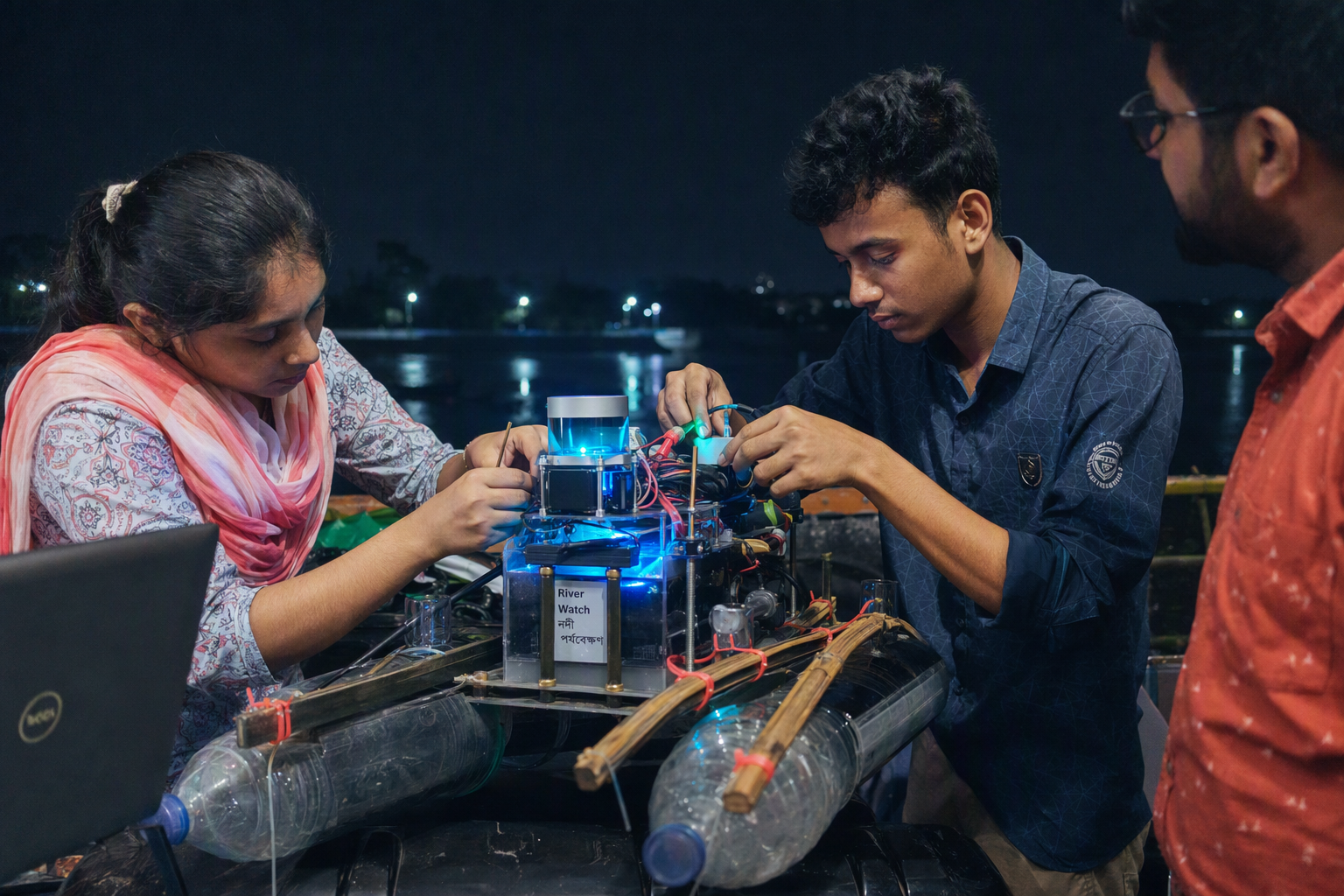
Young makers testing a small wheeled river-monitoring robot in a shallow blue water channel
Guided session

River Robotics

Build a palm-sized rover that can follow a model riverbank, sense an obstacle, and signal a change in water conditions. Teams compare wheel shapes before tuning a simple sensor rule.

Age
11–16
Skill
Beginner
Duration
2 hours

Materials: Recycled plastic, low-voltage motors, cork wheels, LEDs, and reusable sensor boards.

You will practise: Iteration, basic circuits, sensor logic, and evidence-led design.
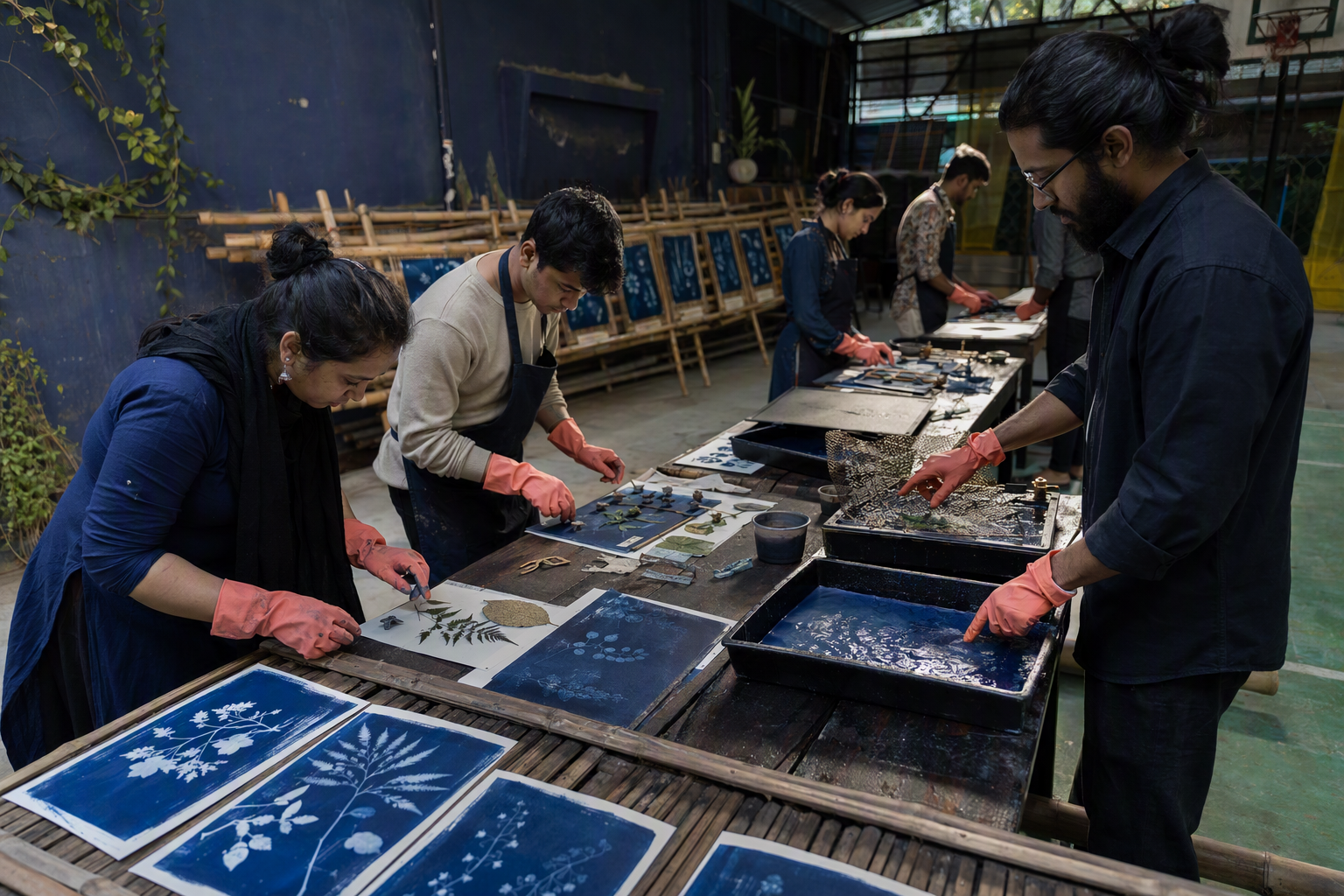
Participants arranging leaves and geometric stencils on blue solar-print paper beside a sunlit window
Open studio

Solar Printing Studio

Compose a cyanotype with local plant forms, architectural shadows, and transparent diagrams. Learn how ultraviolet light changes iron salts, then rinse and annotate your deep-blue print.

Age
8+ with an adult
Skill
All levels
Duration
45–75 min

Materials: Pre-treated cotton paper, botanical samples, acetate shapes, water trays, and aprons.

You will practise: Composition, exposure testing, chemical observation, and visual storytelling.

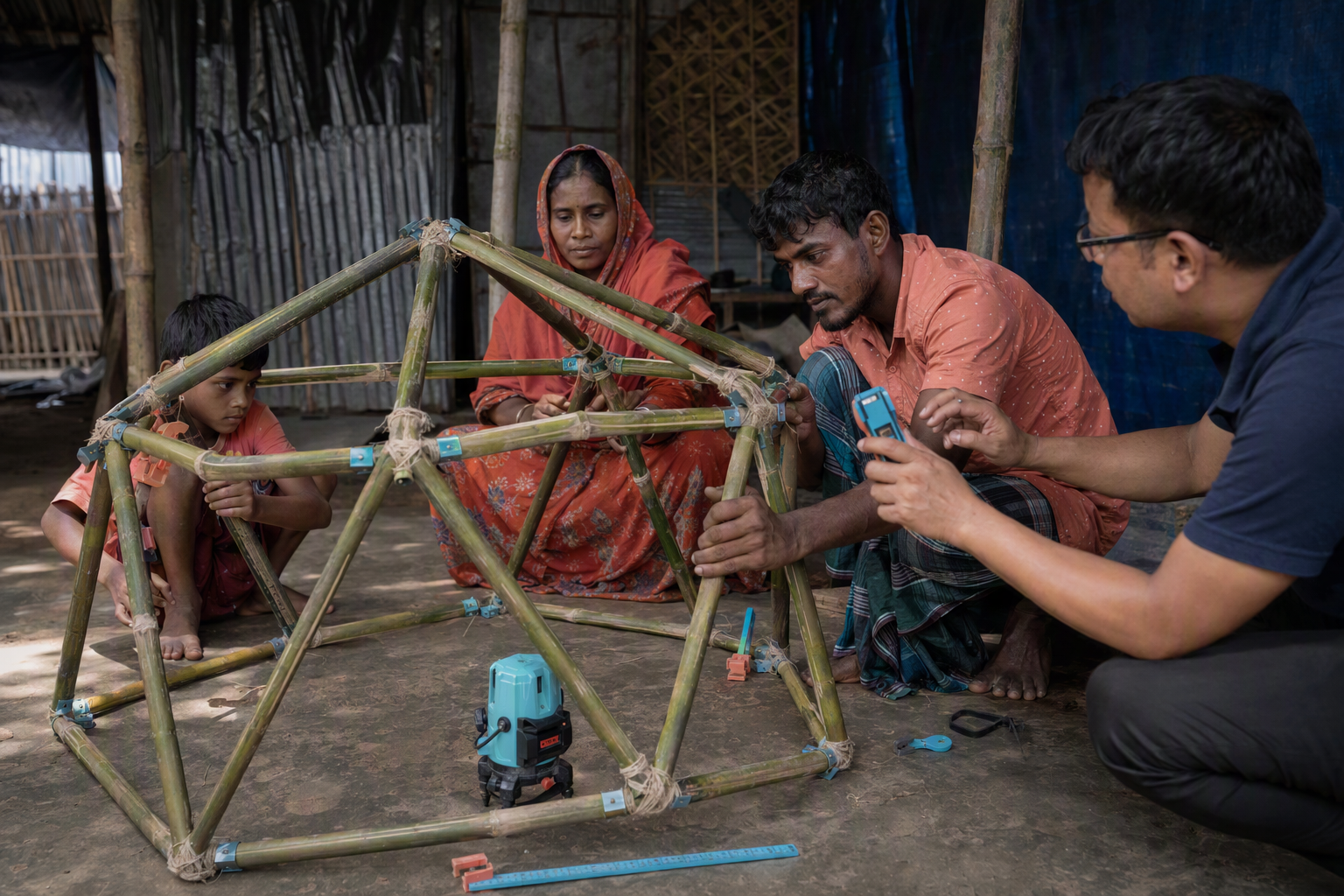
University-age makers joining slender bamboo strips into a lightweight arched structure on a workbench
Guided session

Bamboo Structures

Study why triangles, curves, and woven joints carry loads differently. Prototype a light shelter span, test it with calibrated weights, and strengthen only where the evidence asks you to.

Age
16+
Skill
Some hand-tool confidence
Duration
3 hours

Materials: Split bamboo, jute cord, paper fasteners, cutting mats, spring scales, and clamps.

You will practise: Structural reasoning, safe cutting, joint design, and load testing.

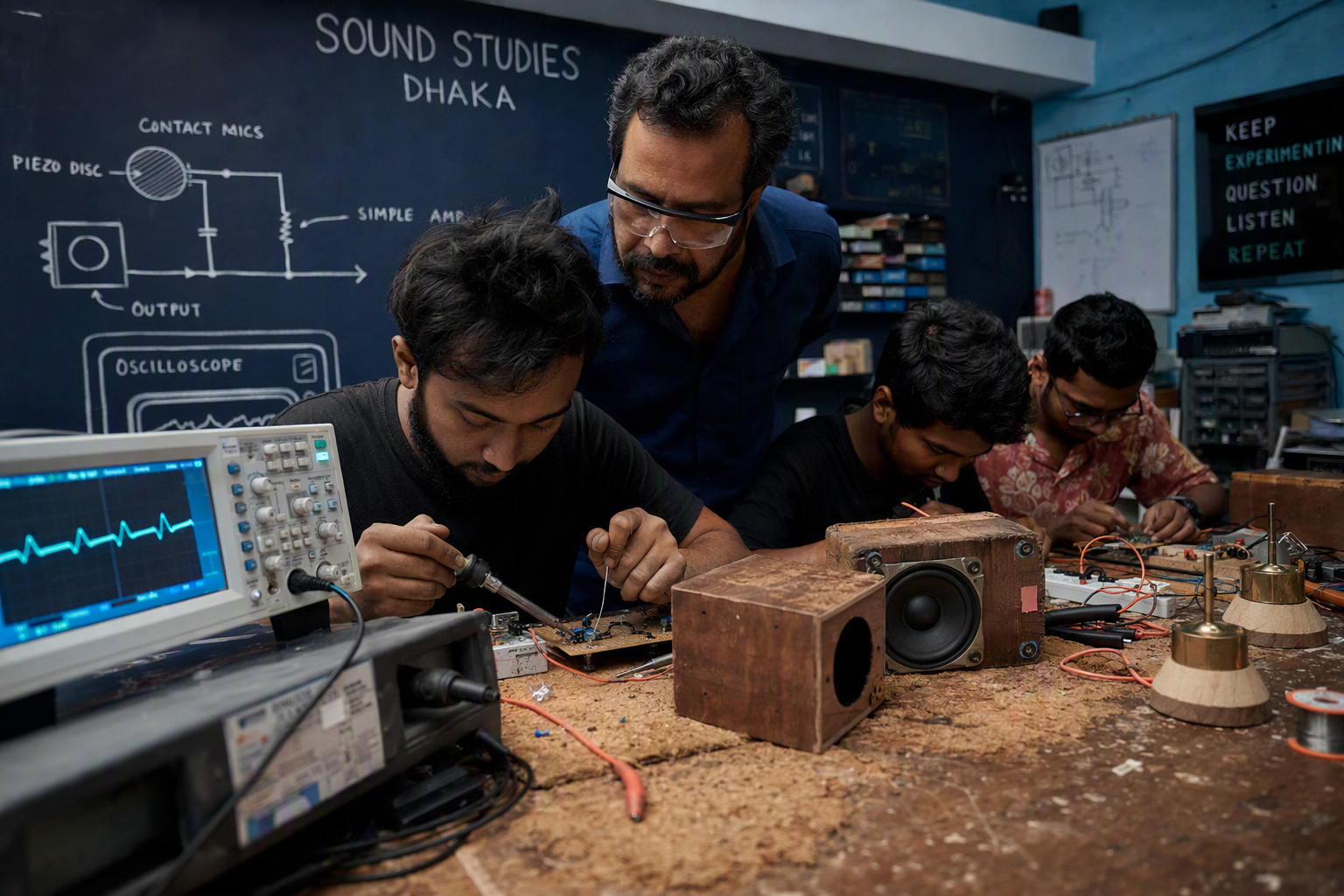
Two participants connecting copper tape and electronic sound modules to a colorful handmade instrument
Maker evening

Sound Circuits

Turn touch, resistance, and rhythm into an electronic instrument. Breadboard a tiny oscillator, shape its pitch with everyday conductive objects, and perform a one-minute ensemble score.

Age
15+ and adults
Skill
Beginner-friendly
Duration
2.5 hours

Materials: Breadboards, speakers, resistors, copper tape, graphite, conductive fabric, and 5V power.

You will practise: Circuit reading, troubleshooting, acoustic play, and collaborative performance.

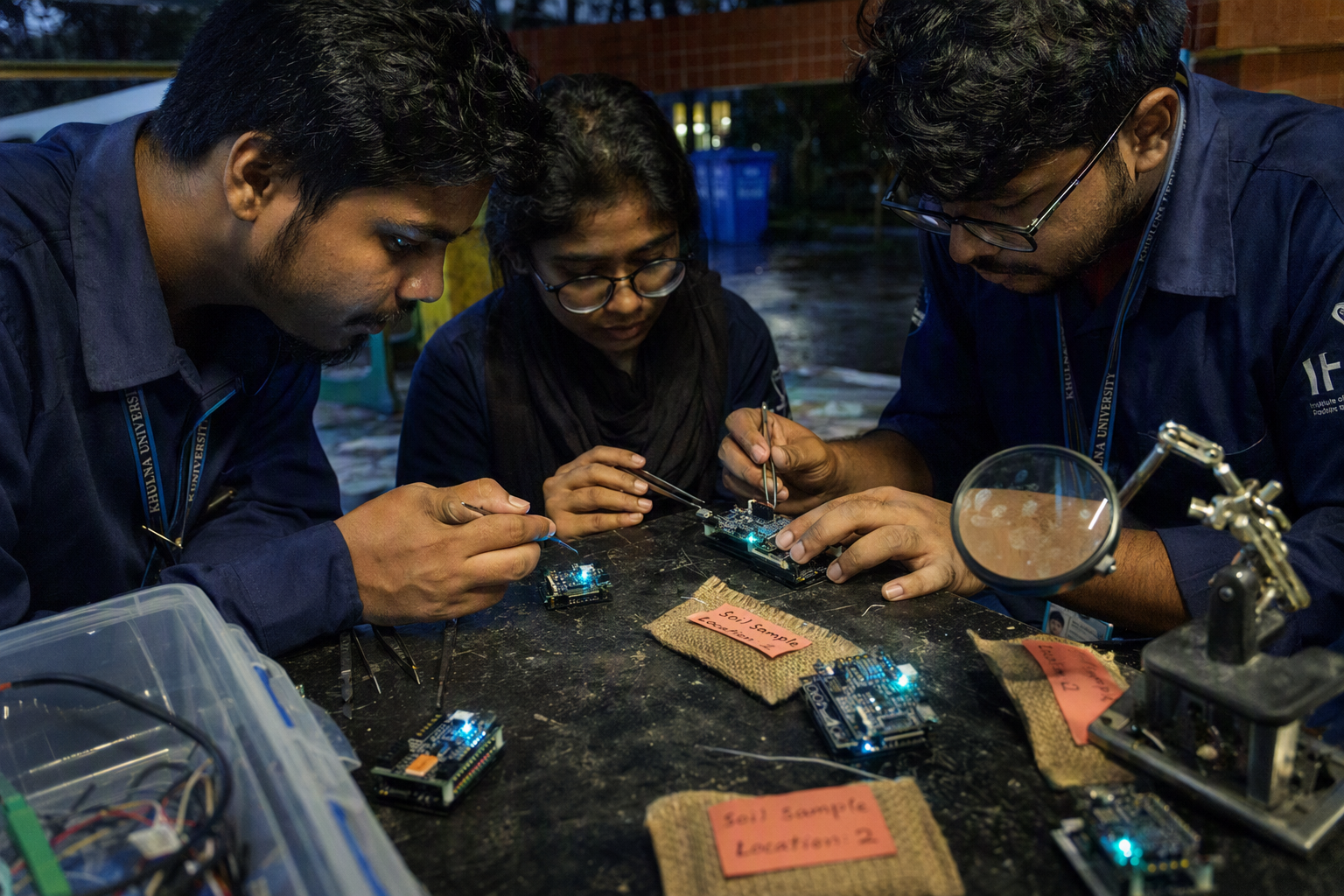
A close view of hands wiring tiny temperature and humidity sensors beside a laptop displaying live environmental data
Skills intensive

Micro Sensors for Monsoon Streets

Assemble a compact temperature and humidity logger, collect a short indoor-outdoor dataset, and decide what your readings can and cannot reveal about a city microclimate.

Age
18+
Skill
Intermediate
Duration
4 hours

Materials: Microcontrollers, plug-in sensors, solderless boards, weather shields, and shared laptops.

You will practise: Data logging, calibration, responsible interpretation, and enclosure design.

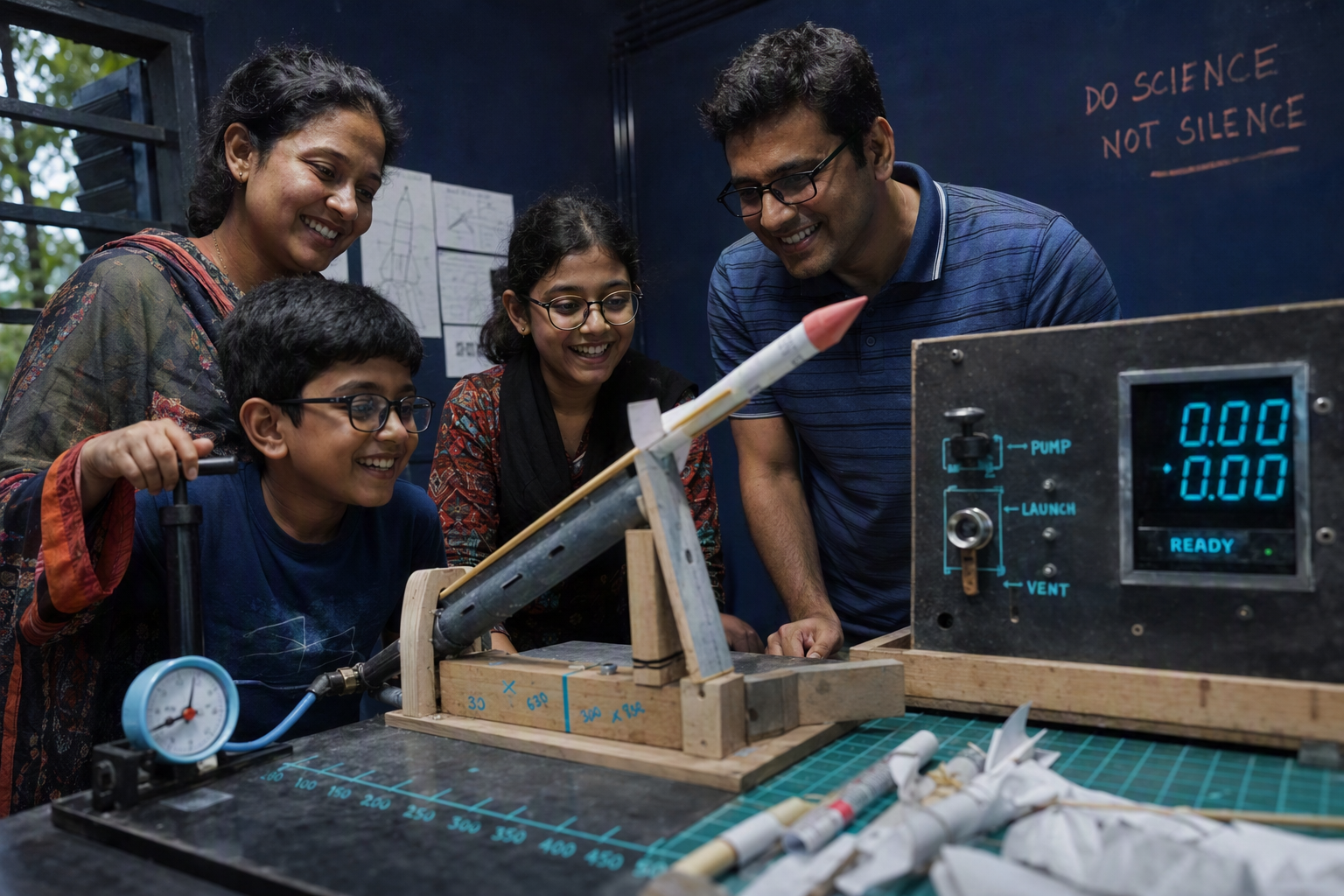
A family adjusting fins on a colorful air-powered paper rocket at an indoor launch range
Family lab

Family Launch Lab

Design an air-powered paper rocket for a target rather than maximum distance. Families vary fin shape and nose weight, predict a flight path, then compare three launches.

Age
6–12 with an adult
Skill
First-time makers
Duration
75 minutes

Materials: Paper tubes, card fins, reusable clay, tape, measuring lines, and low-pressure launchers.

You will practise: Prediction, measuring, fair tests, turn-taking, and joyful redesign.

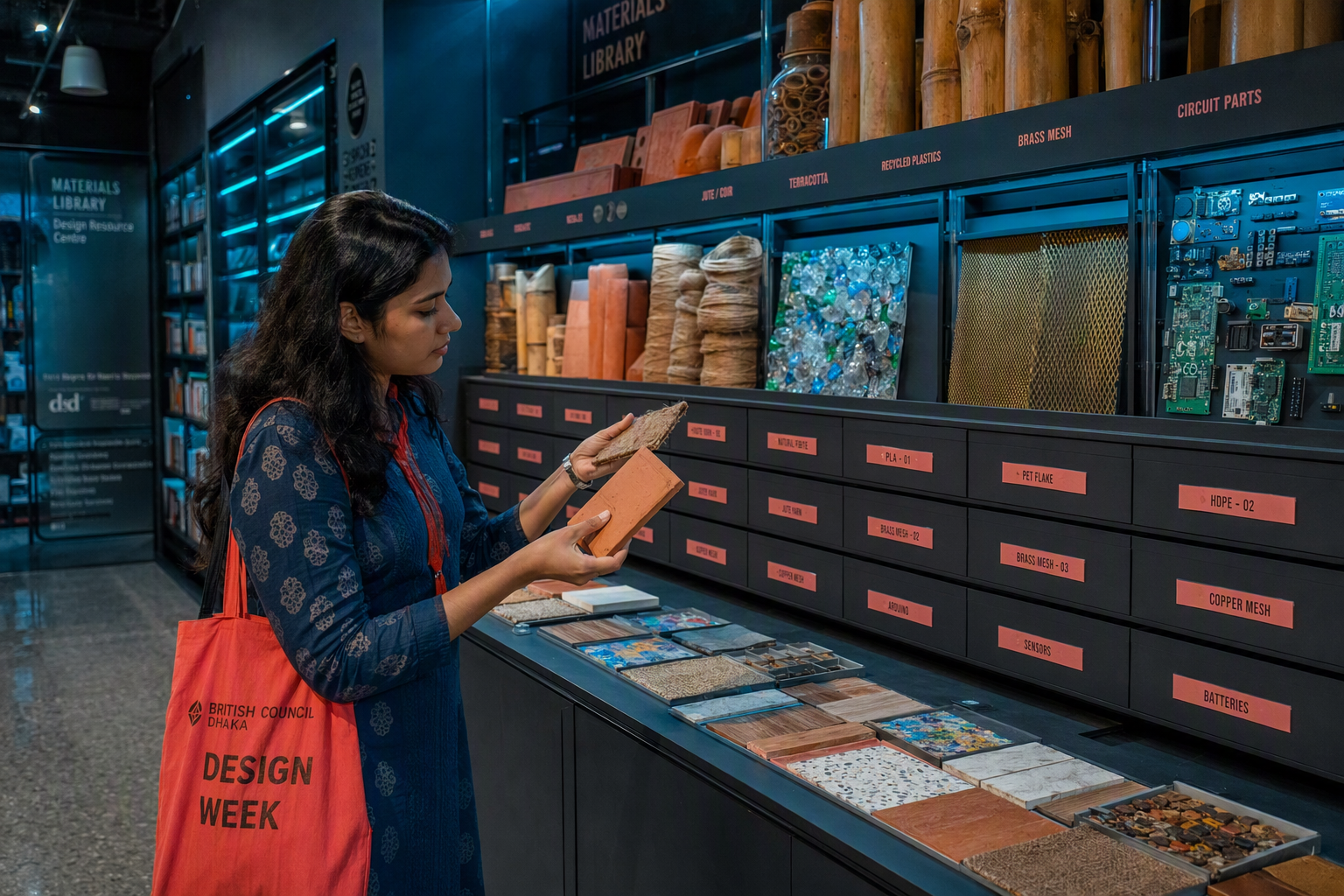
Labeled trays of bamboo, jute, electronic parts, paper, pigments, and hand tools in Orbit Yard's material library
Choose a format by pace, support, and who is making with you.

Find your pathway

The right amount of structure

Not every maker needs the same room, pace, or outcome. Use these four formats as a starting point.

Drop-ins and open studios

Best for flexible visits and low-pressure experimentation. Arrive within the published window, choose a prompt, and work for roughly 45 to 90 minutes with roaming facilitators.

Guided sessions

Best for learning a process from start to finish. A small cohort moves through demonstrations, build stages, testing, and reflection together at a defined start time.

Family labs

Best for children and adults who want to make side by side. Tasks offer meaningful roles for different ages, with shared tools and no expectation that adults do the difficult parts.

Educator programs

Best for school teams and learning designers. We adapt a studio investigation around group size, curriculum questions, access needs, and post-visit classroom use.

Review access information

Workshop inquiry

Tell us what your group hopes to explore.

Share a little context and the fictional Orbit Yard team will respond with suitability guidance. This form is for conversation only.

No reservation or payment

Submitting this preview form does not hold a date, book a workshop, create an account, or take payment. Program dates, capacity, and fees would be confirmed separately.

  • 2 working daysIllustrative response aim
  • 8–24 peopleTypical guided group range
  • Access-firstAdaptations discussed before dates

Fields marked are required.

The person we should reply to.

Use an address you check regularly.

Include approximate group size, ages, experience, and any access or sensory considerations. 20–500 characters.

Tell us about your learning goals, timing, and what would make the session useful. 30–1,200 characters.

In this fictional preview, form details are used only to demonstrate inquiry handling and should not include sensitive personal information.

No inquiry has been submitted. This local preview does not contact a real venue.