Stories about rain gauges made at kitchen tables, light split by painted metal, night insects around balcony gardens, and the patient work of noticing how Dhaka moves.
A fictional Orbit Yard field study asks what happens when families, students, and repair-minded makers build a shared monsoon sensor array from familiar parts.
12 minute readSeptember 2026Dhaka field notes
Twenty compact stations turn rainfall, humidity, roof temperature, and wind into a local record. The most useful result is not a perfect forecast. It is a new language for comparing the weather one lane at a time.
Each dispatch begins with an ordinary material, place, or habit and follows the science hiding in plain sight.
Light
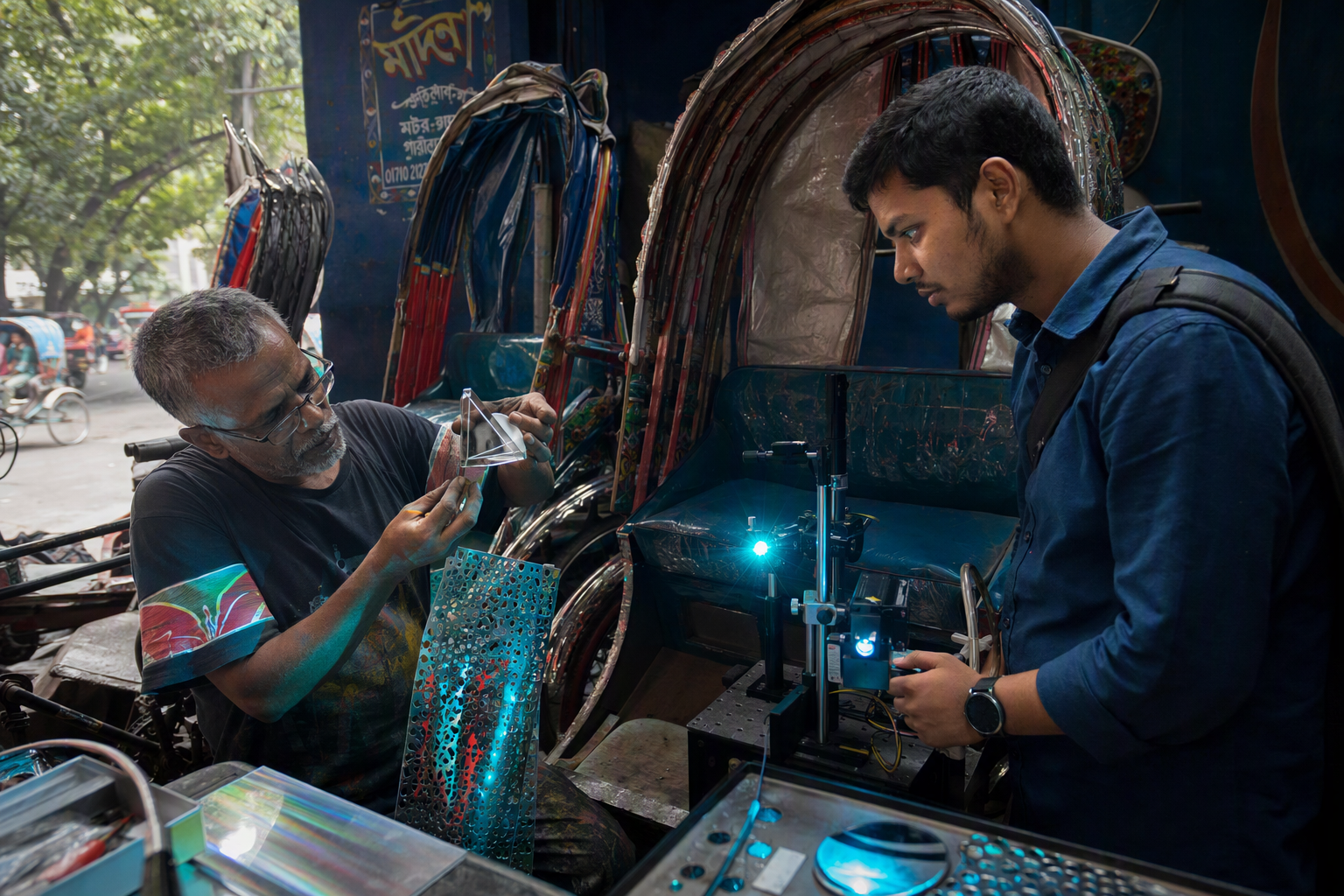
Rickshaw optics: color that moves
We trace reflection, fluorescence, and layered color through the geometry of painted panels, then build a pocket-sized light viewer.
6 minute readPhoto essay
Signals
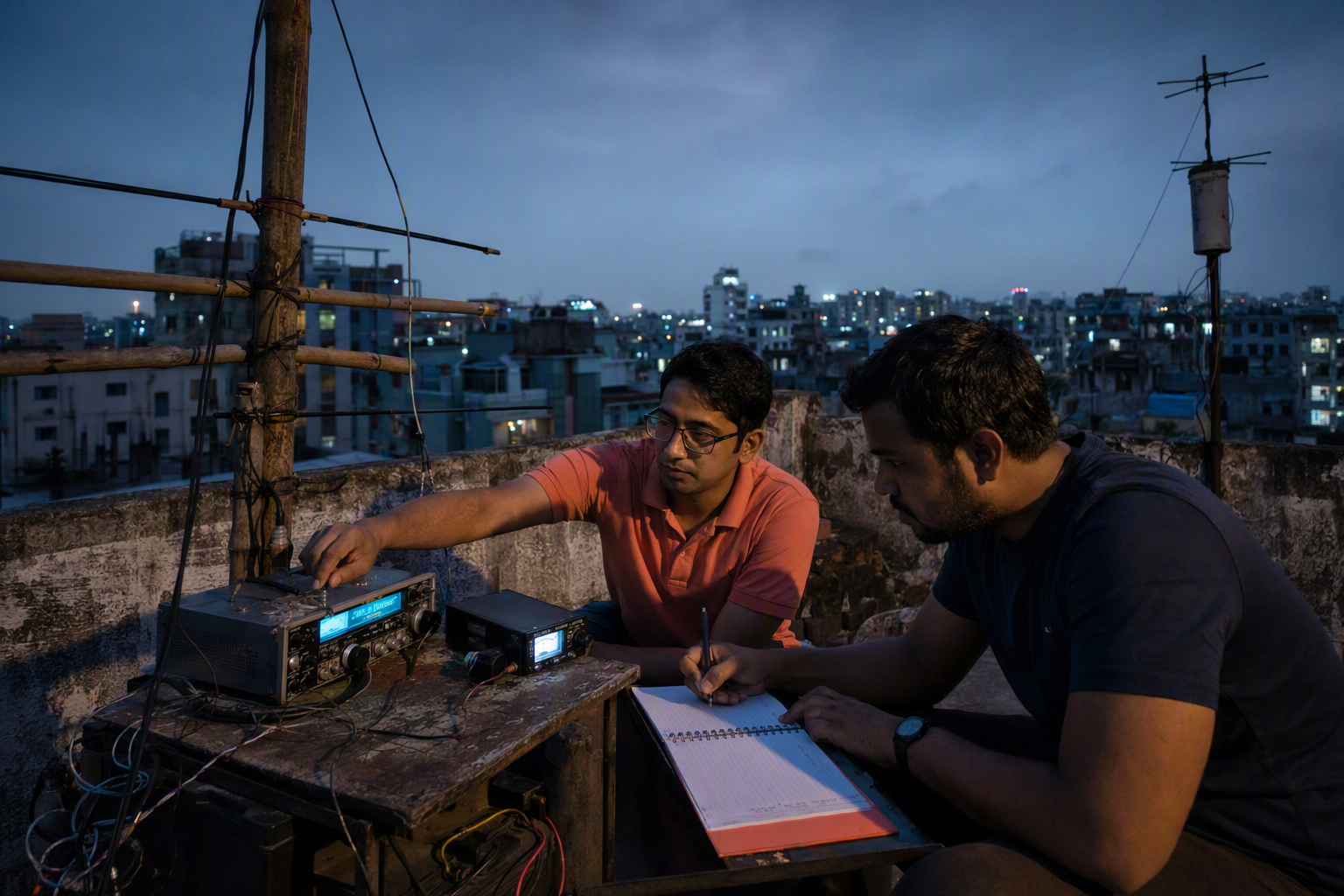
The rooftop radio hour
A coil of copper wire, an open horizon, and a patient tuner reveal how buildings bend and shelter the signals crossing the city.
8 minute readField test
Materials
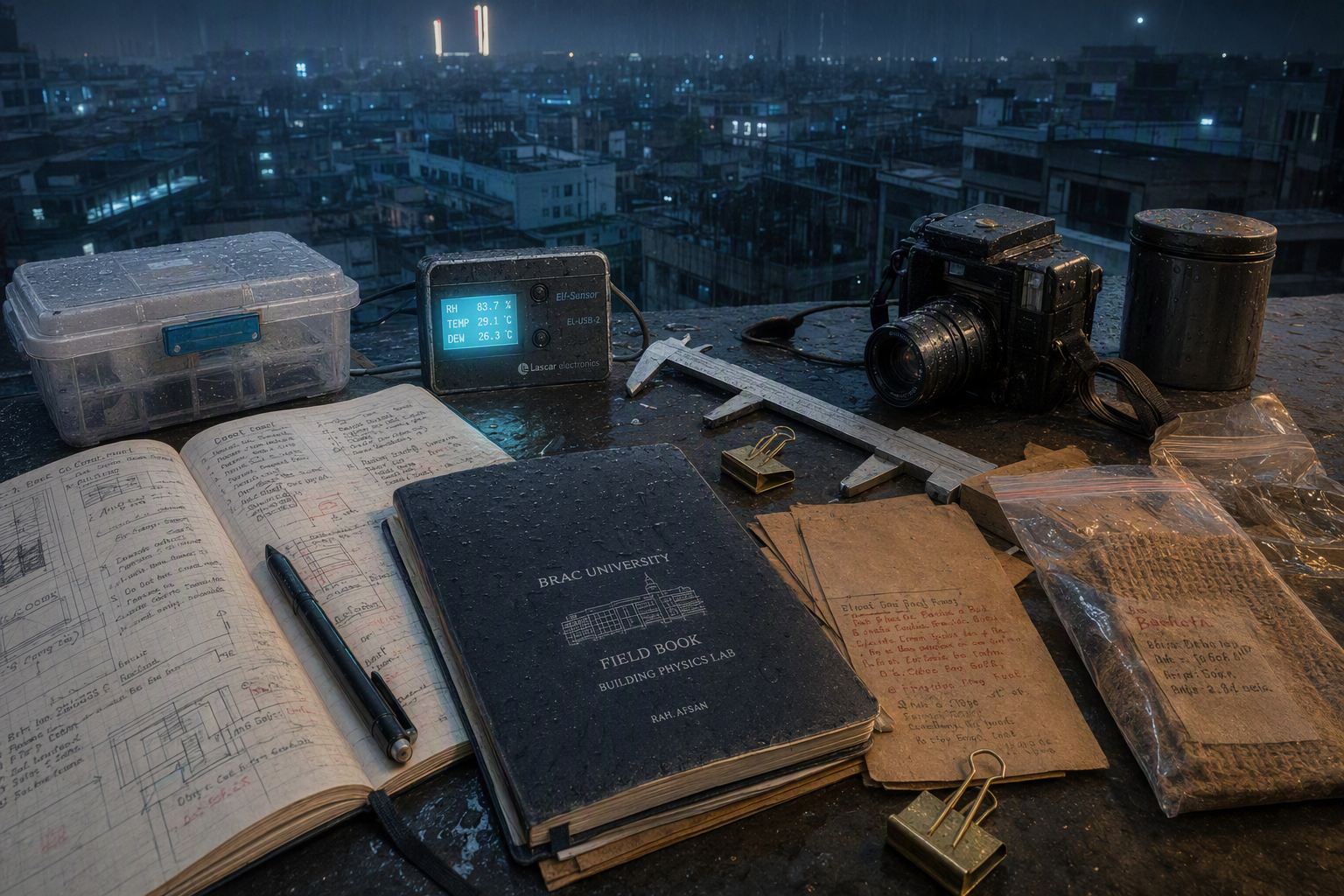
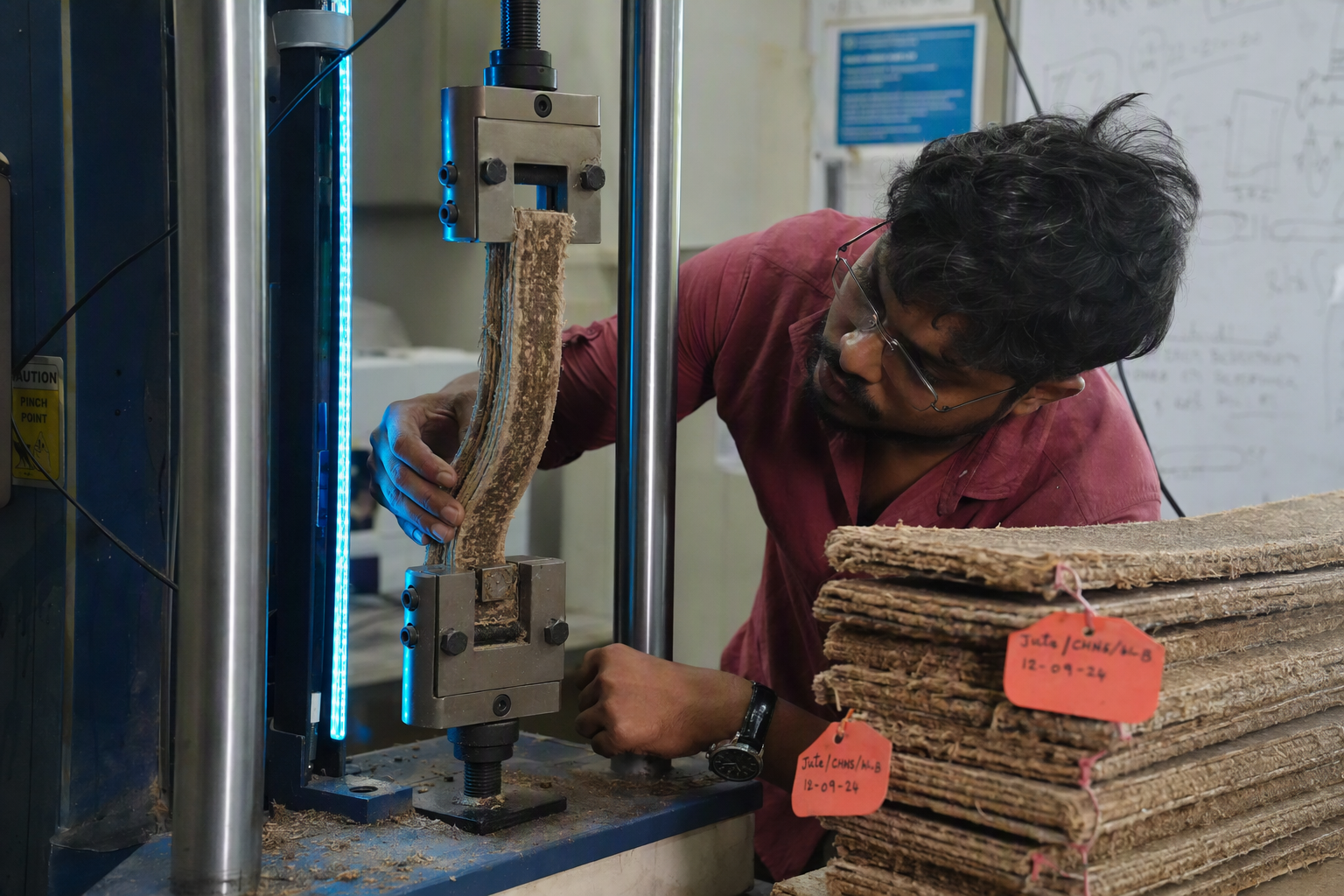
Can jute remember a curve?
Layer by layer, a familiar fiber becomes a light structural shell. We examine tension, moisture, failure, and repairability.
7 minute readMaterial study
Life
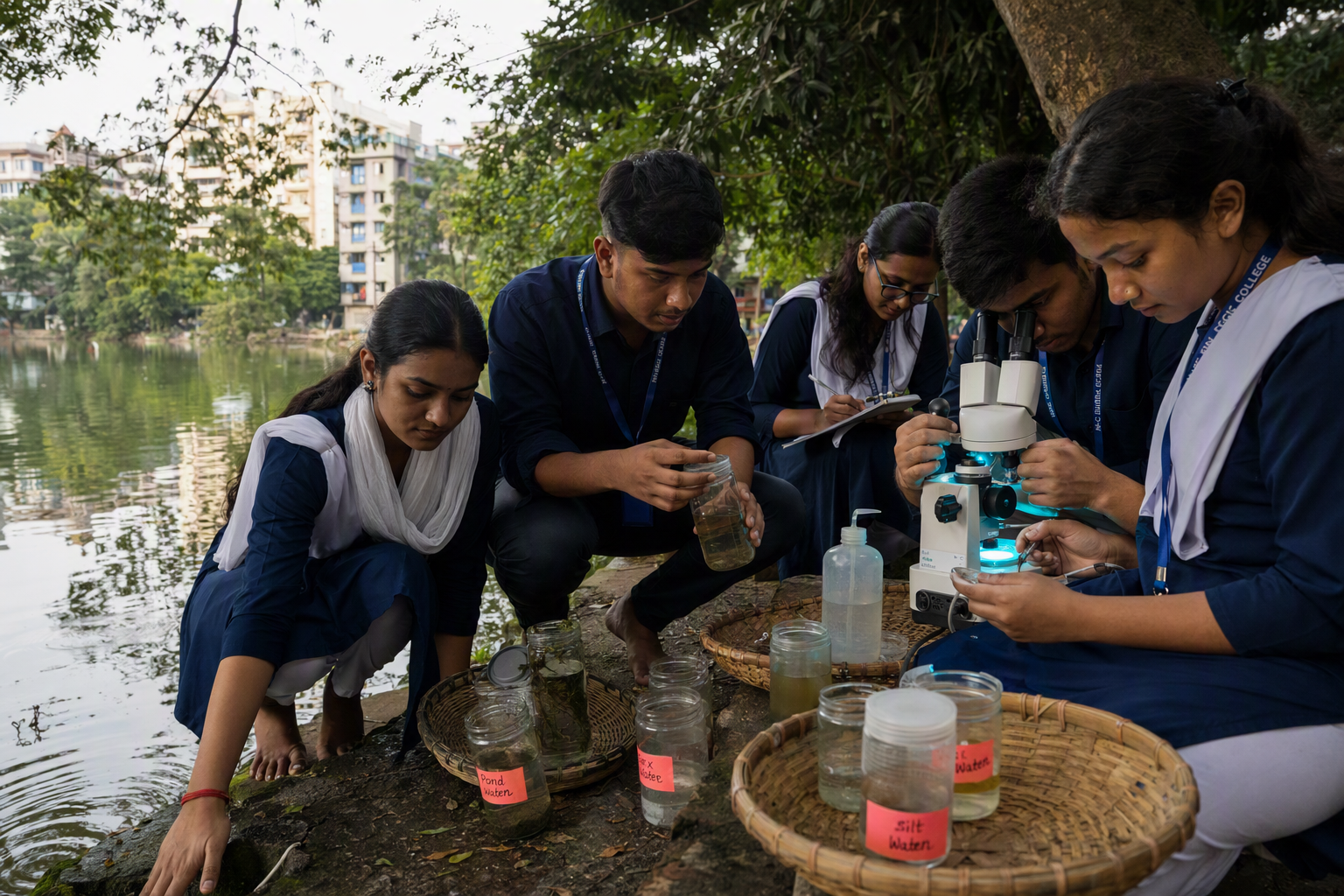
A pond in one bright drop
Portable microscopes reveal algae, larvae, and drifting organisms while a careful sampling guide keeps curiosity from becoming disturbance.
9 minute readObservation guide
Ecology
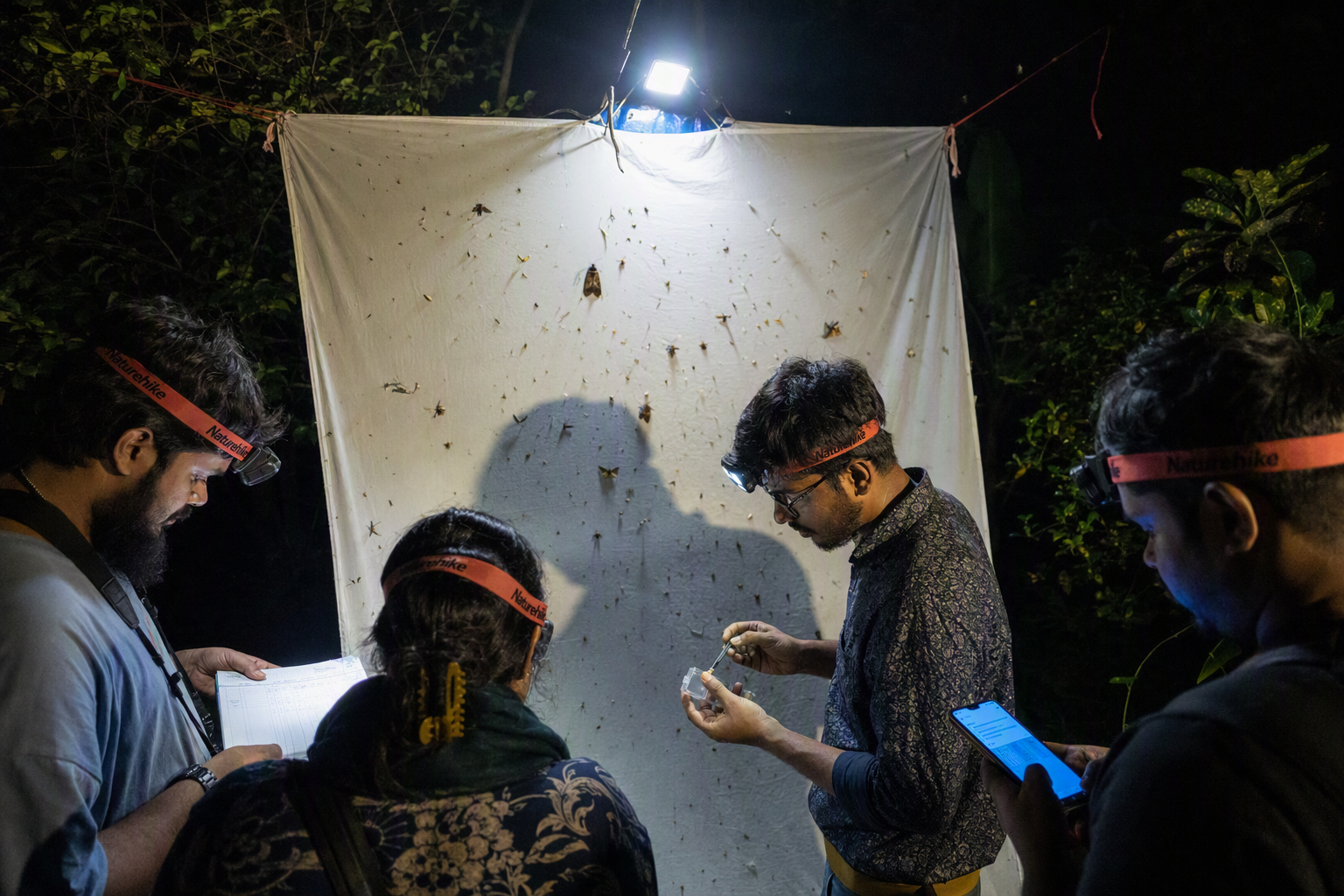
Who visits the balcony after dark?
A low-light count of moths, beetles, and other pollinators changes how one apartment garden thinks about scent and illumination.
5 minute readNight log
Climate
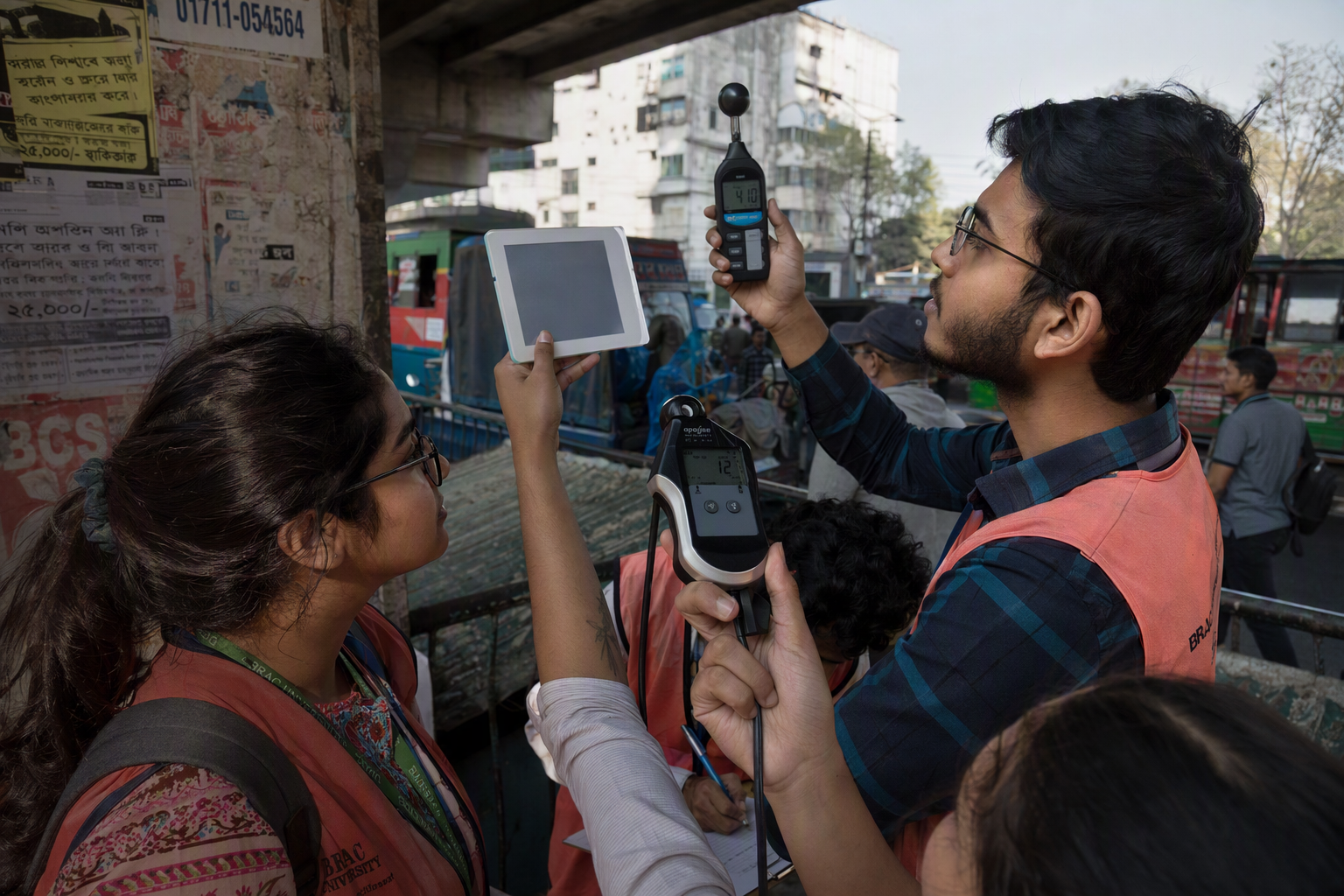
The temperature of waiting
Surface readings at a fictional bus stop show why shade angle, airflow, seating material, and time of day belong in the same conversation.
10 minute readUrban measurement
Sound
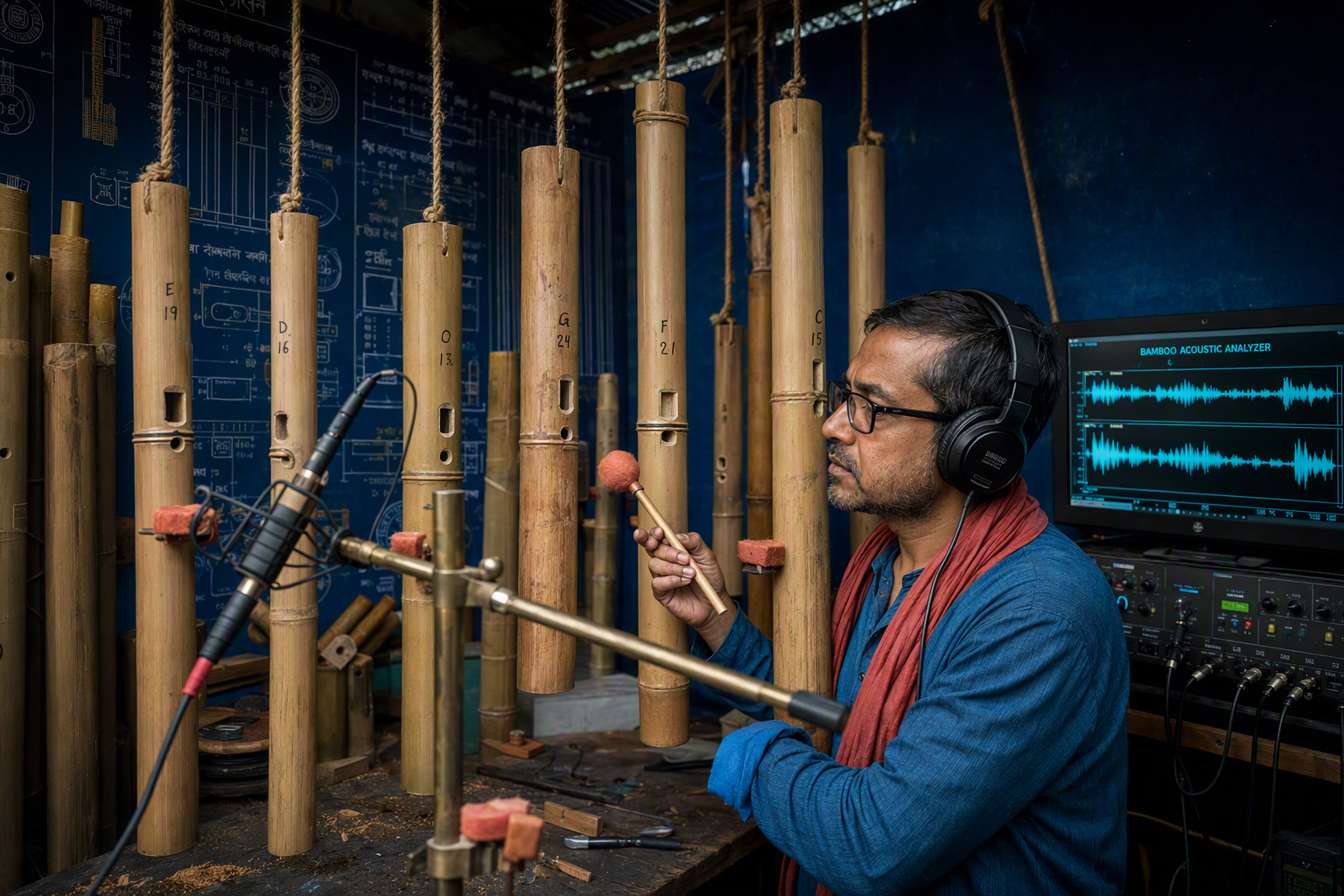
Listening to bamboo breathe
Cut length, wall thickness, and open air turn a bundle of bamboo into a map of resonance that can be heard and felt.
6 minute readBuild notes
Geometry
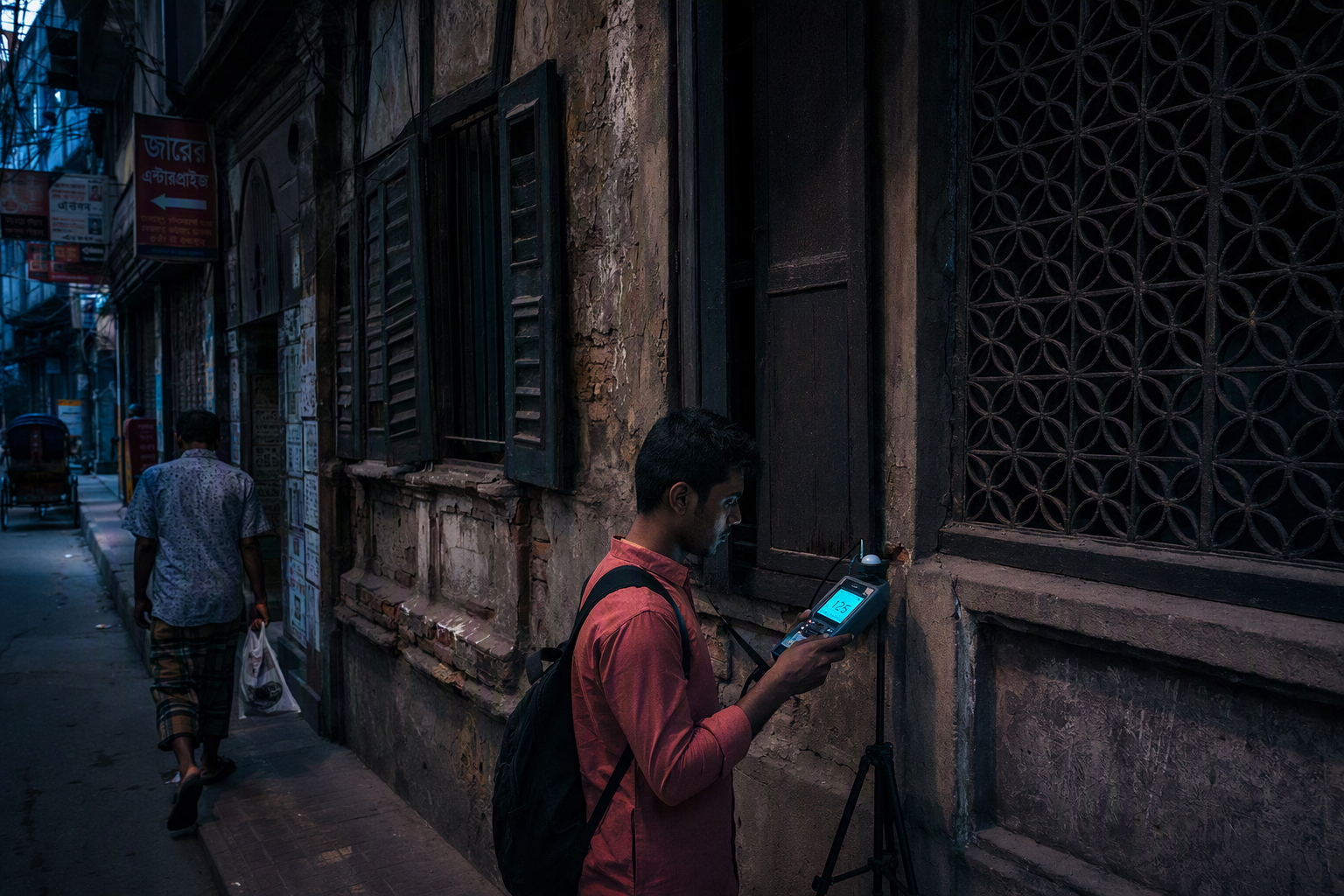
The moving edges of an old lane
Repeated photographs turn balconies, awnings, and narrow gaps into a solar clock drawn across walls and paving.
7 minute readVisual notebook
Complete feature · Field systems
When the rain became a neighborhood instrument
A design notebook from an imagined community sensor project, written for Orbit Yard Journal.
12 minute readPublished September 2026Fictional editorial feature
The first useful question
At 3:17 in the afternoon, the sky over the fictional Orbit Yard workshop turned the color of graphite. Within minutes, rain was drumming on sheet metal, balcony rails, leaves, water tanks, and the small funnel fixed above our test bench. The instrument counted each tip of its handmade seesaw. Across the imagined city, nineteen related devices were waiting for the same storm.
The project began with a tempting but unhelpful question: could we make a perfect local weather station? Perfection would have pushed the team toward sealed imported hardware and away from the people who wanted to understand, repair, and adapt the device. So the question changed. What is the simplest instrument that can produce a trustworthy conversation about rain?
That shift shaped everything. The stations would not claim to replace official meteorology. They would show relative conditions across a small network, reveal gaps and errors, and let participants see how measurement is made.
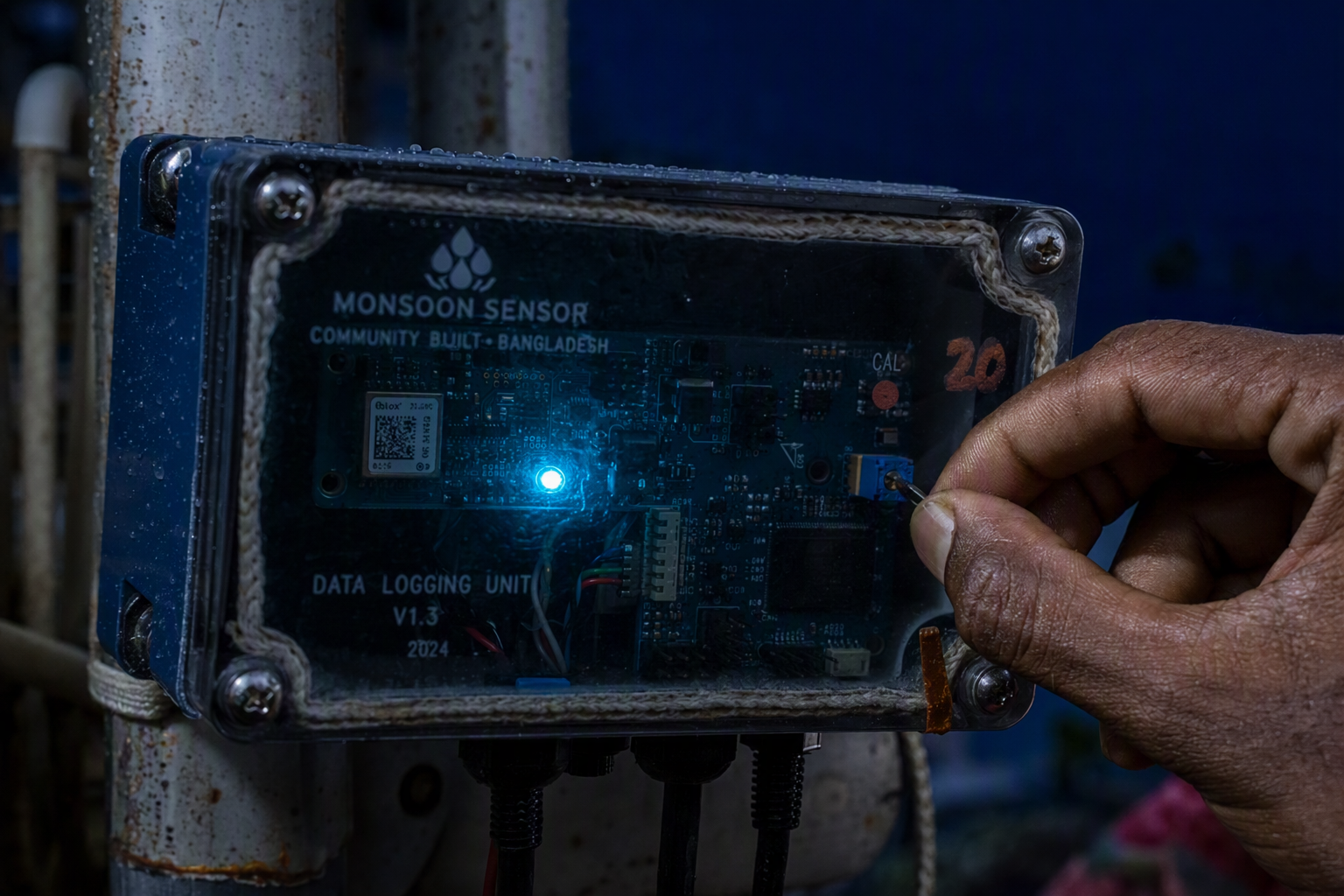
A transparent cover makes the tipping mechanism, wiring, and points of possible failure visible.
A station that explains itself
Each fictional kit contains a rain collector, a paired humidity and temperature sensor, a shaded surface probe, and a simple wind indicator. Components sit on a board with their names printed beside them in Bangla and English. The enclosure opens with ordinary screws. A colored diagram follows every wire from sensor to microcontroller, while a small display shows both the latest reading and the time since the last successful record.
Making the system legible matters because sensors are persuasive. A number glowing on a screen can look authoritative even when a funnel is blocked, a wire is loose, or afternoon sun is heating the enclosure. Every station therefore includes a “reason to doubt” card: check the level, clear the collector, compare with a manual gauge, inspect the shade, and record anything unusual nearby.
“The strongest reading was not a number. It was the moment two neighboring stations disagreed and everyone knew how to investigate why.”
Calibration became a social event
Before installation, participants gathered around long tables with measuring jugs and notebooks. They poured known amounts of water through each collector, counted the mechanism’s tips, and adjusted one small screw. Teenagers timed the pours. Younger children watched for splashes. Engineering students checked the calculations, then asked a better question: could someone repeat this procedure six months later without us?
The final calibration guide uses drawings, short sentences, and a physical reference line on the jug. It also asks participants to write down uncertainty rather than hide it. A station that reports 18 millimeters after a rough, wind-driven storm may still be useful, but only if its conditions travel with the number.
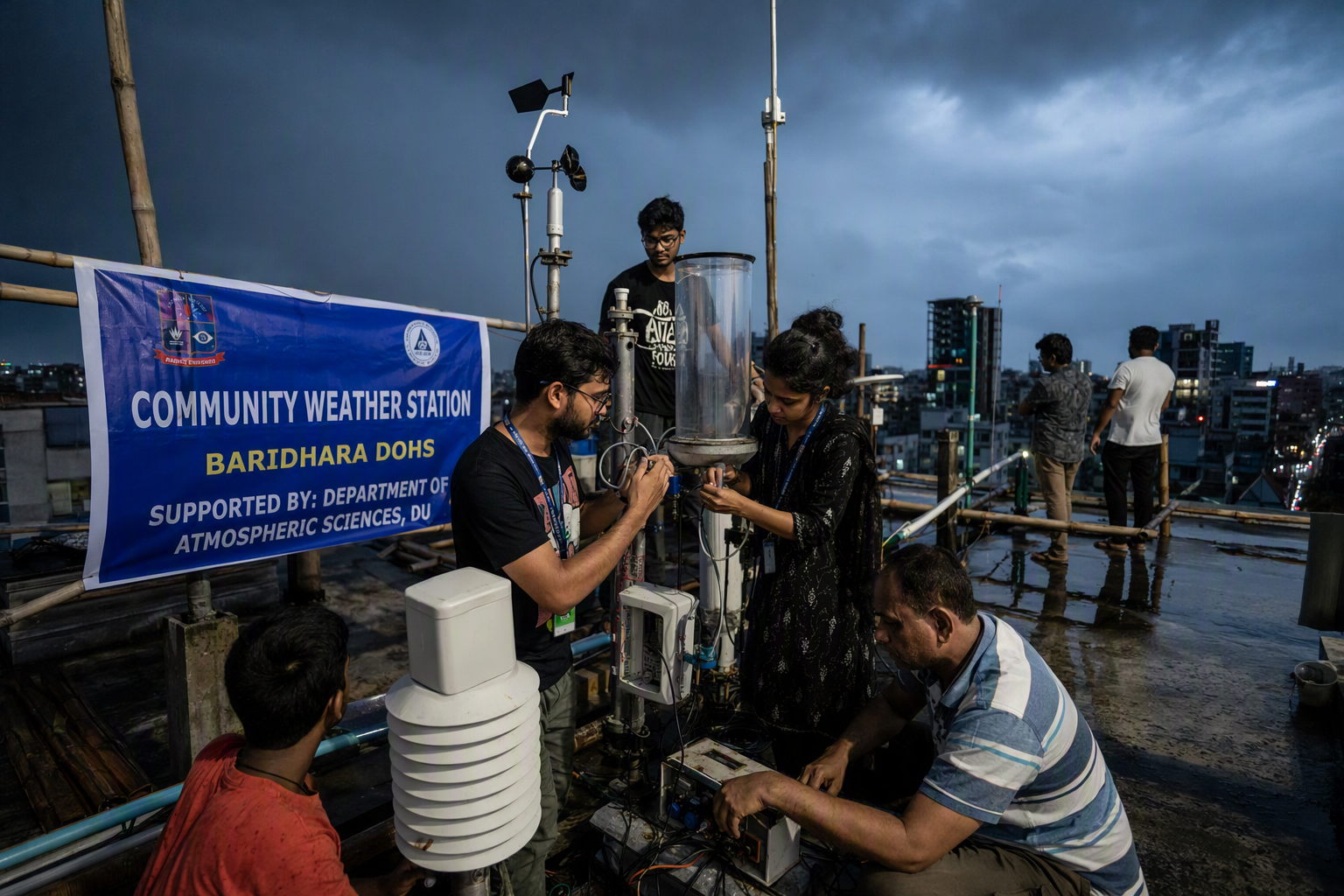
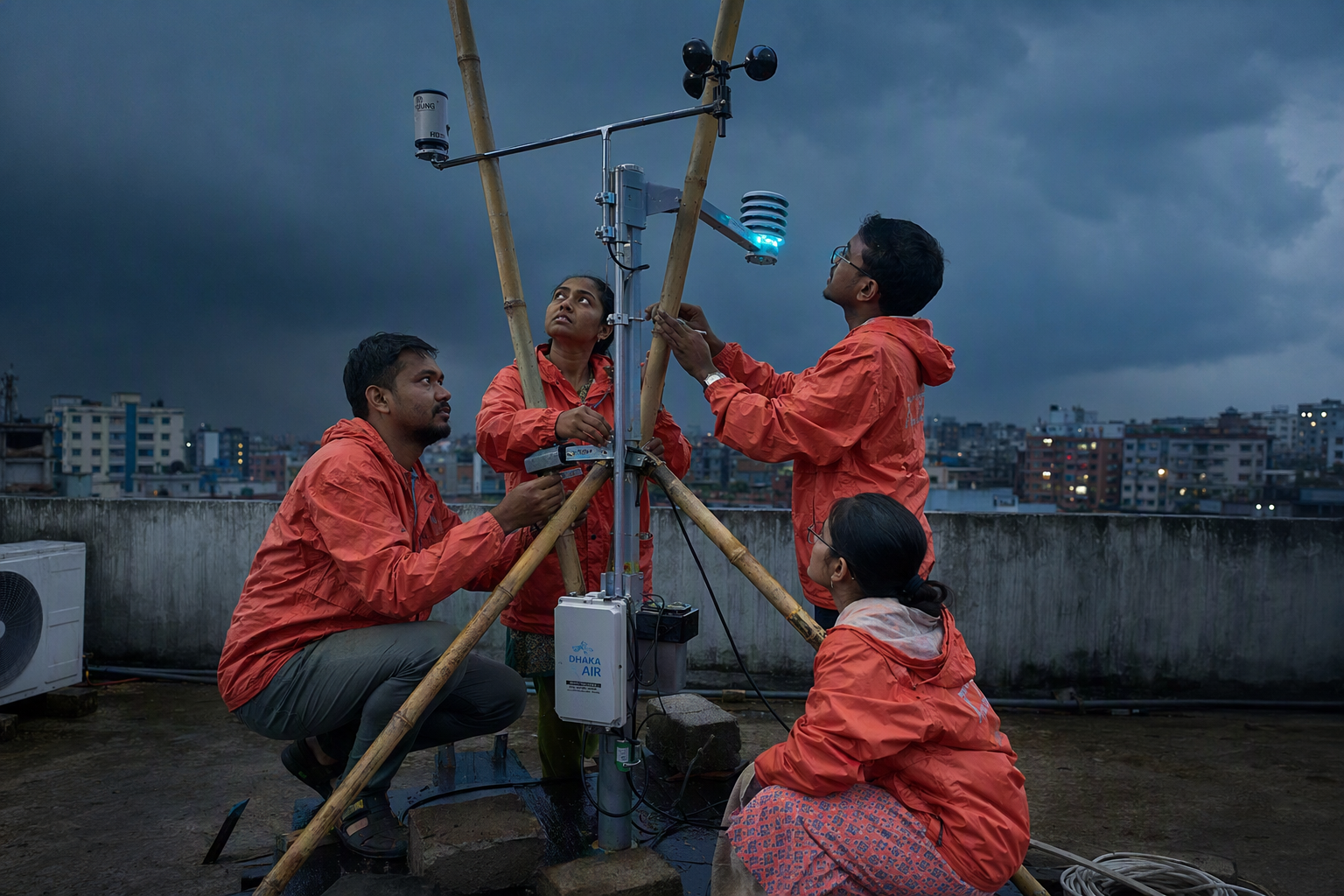
The imagined installation team checks height, shade, drainage, cable strain, and a safe maintenance route.
Where an instrument lives changes what it knows
One station sits above a broad concrete roof. Another is sheltered by a parapet. A third is near plants that release moisture after watering. These are not flaws to erase. They are the local conditions the network is built to notice.
Installation notes record surrounding walls, roof material, nearby shade, safe access, and likely sources of splash. No exact home locations appear in the shared view. Each device uses a neighborhood-scale label, protecting privacy while preserving enough context to compare patterns.
Maintenance is planned before the first reading. Every host identifies a safe route, a dry place for tools, and a second person to contact if rooftop conditions are unsafe. During lightning, high wind, heavy rain, or extreme heat, the station waits. Data is never more important than the person gathering it.
Reading the spaces between the lines
After the imagined first month, the array’s dashboard showed familiar rhythms: humidity rising overnight, sun-warmed roofs separating after noon, and bursts of rain that appeared unevenly across short distances. But the group spent as much time looking at missing data as complete curves.
A blank interval might mean a power interruption, a disconnected cable, a full memory card, or a host who sensibly chose not to cross a wet roof. The dashboard labels these gaps instead of drawing a smooth line through them. Missingness becomes part of the account.
Participants annotate the shared timeline with observations that sensors cannot capture alone: a drain backing up, a sudden cool gust, construction dust inside a funnel, cloud arriving from one side of the skyline. The result is neither pure instrument record nor anecdote. It is a layered field note.
What a community array can and cannot say
The stations can support learning, reveal hyperlocal contrasts, and help people ask sharper questions about buildings, shade, drainage, and maintenance. They cannot issue public safety warnings, certify flood risk, or stand in for official forecasts and emergency guidance. The fictional project repeats that boundary in workshops, on the dashboard, and beside every downloadable data file.
That limitation does not make the project small. It makes the work honest. Participants leave with a practical sense of how evidence is assembled: one physical mechanism, one placement decision, one maintenance record, and one careful comparison at a time.
The next storm
When another dark cloud gathers, the array will begin from slightly different conditions. A collector may have been cleaned. A plant may have grown into the shade line. Someone may have improved a connector or rewritten a label. The network is not a finished object. It is a public habit of checking, repairing, documenting, and asking what changed.
That is the real instrument Orbit Yard hopes to prototype: not twenty identical boxes, but a group of people confident enough to open the lid, question the reading, and make the next version easier for someone else to understand.
Notes from the yard
One thoughtful dispatch, occasionally
Subscribe to test the local preview flow for new field notes, workshop notebooks, and exhibition essays. No data is transmitted or stored.